
July 3, 2025
by Mike Crispen
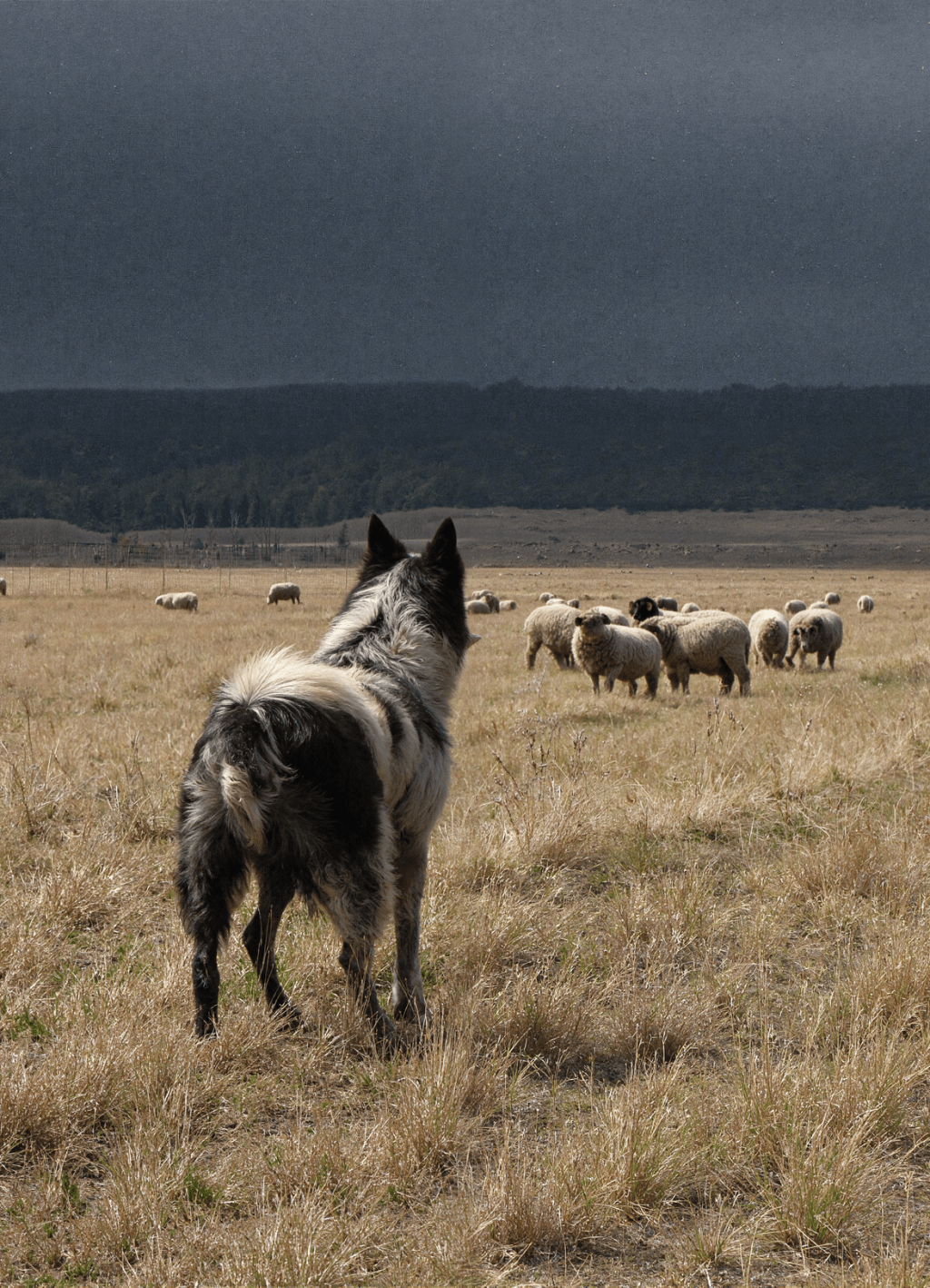
Imagine a sheepdog standing on the edge of a dark field. He doesn’t blend with the sheep; he doesn’t look to them for approval. His eyes are always scanning the horizon, always listening for the distant sound of a threat. He isn’t there to be liked — he’s there to protect.
This is the image that echoes through law enforcement circles. The sheepdog metaphor isn’t just a catchy phrase; it’s a mission statement. A reminder that your calling as a protector isn’t about you — it’s about the vulnerable you guard.
As a police officer, your life mirrors the sheepdog’s watch. You don’t stand post for applause. You don’t lace up your boots hoping for gratitude. You go because there are wolves out there — dangers that most people will never see, and vulnerabilities they may never even imagine.
A sheepdog accepts isolation if it means keeping the flock safe. Likewise, true policing is not about defending the institution of police or winning public favor. It is about shielding the weak, preserving liberty, and holding the line so that others can live freely and peacefully.
The sheep may not understand the sheepdog. They might shy away from his sharp bark or flinch at his readiness to confront. But he doesn’t waver. He doesn’t adjust his mission to win their affection. He remains steadfast because their safety — not their approval — is his ultimate concern.
Your badge is not a token of status; it is a covenant to step forward when others step back. It is a visible sign of an invisible promise: to guard, to serve, and if necessary, to sacrifice.
The Historic Lineage of Guardians
Your role as a protector didn’t appear overnight. It stands on the shoulders of centuries of men and women who chose duty over comfort, service over self.
The oldest roots trace back to the shepherds of the ancient world. In biblical times, shepherds weren’t simply animal herders; they were warriors, watchmen, and guides. David defended his flock from lions and bears before ever stepping onto a battlefield. The image of the shepherd runs throughout Scripture as a model of patient, vigilant guardianship — a protector who stays, even when the threat is unseen and the job thankless.
Fast forward to the founding of America. The early patriots didn’t build government to dominate but to safeguard natural rights — life, liberty, and property. Their vision of law enforcement was grounded in protecting the individual from both external threats and internal chaos. Civil order wasn’t about controlling the public but ensuring that every person, especially the weakest, could live free from fear.
After the Revolution, communities depended on local constables and watchmen — ordinary citizens who understood that peace and freedom go hand in hand. Protecting the public wasn’t a matter of applause or personal fame; it was an act of civic virtue. Leaders like George Washington embodied this spirit, stepping down from power voluntarily, showing that true strength lies in self-restraint and service to the greater good.
Then came Sir Robert Peel in 1829, shaping modern policing as we know it. Peel’s vision was revolutionary: police exist to serve the public, and their power depends on public consent and moral authority. His principles still echo today: “The police are the public and the public are the police.” Peel knew that a true protector doesn’t wield power for dominance but for defense. He believed that each officer’s legitimacy rested on restraint, fairness, and unwavering dedication to duty.
Throughout history, the greatest guardians shared a single focus: the vulnerable. Their loyalty wasn’t to popularity or political winds but to the silent majority who depended on them. When critics shouted or crowds jeered, these protectors stood their ground, knowing their mission reached far beyond momentary opinions.
This is the lineage you belong to. A brotherhood and sisterhood of those who kept watch when others slept. Who held the line when society teetered. Who understood that without guardians, freedom quickly becomes chaos, and the weak pay the highest price.
Remembering this history doesn’t just connect you to the past; it strengthens your present resolve. You are not alone in your fight. You carry a torch passed down by countless protectors before you — a light that must never be extinguished.
Your strength, then, is not about avoiding criticism but about standing immovable in the face of it. Because every time you choose duty over approval, you honor the legacy that made your role possible — and you safeguard the liberty of those who need you most.
Why the Protector Exists: Liberty and the Weak
At the heart of every true protector’s mission lies a simple but profound reality: your duty isn’t about your reputation; it’s about defending those who cannot defend themselves.
Freedom is fragile. It doesn’t sustain itself by slogans or speeches but by the presence of strong, principled protectors willing to stand in the gap. Without you, liberty quickly gives way to fear, and fear to oppression. The weak, the vulnerable, and the innocent always suffer first when order collapses.
In this sense, policing is not fundamentally about enforcing rules or controlling people. They are about upholding the conditions that allow ordinary people to live their lives in peace. Your work makes it possible for children to play outside without fear, for neighbors to gather without violence looming, for communities to thrive rather than shrink into isolated pockets of distrust.
Throughout history, the weak have always been the first to pay the price when society turns inward. Criminals, predators, and those who exploit chaos never target the strong first — they look for the unguarded, the isolated, the defenseless. You exist precisely to stand as a barrier against them.
The biblical shepherd image makes this plain. The good shepherd doesn’t abandon the sheep when the wolf appears; he steps forward, even if it costs him everything. The shepherd’s mission isn’t measured by whether the sheep applaud — it’s measured by whether they remain safe.
Sir Robert Peel understood this when he framed policing as a service to protect life and property, not as an instrument of power. His principles were designed to ensure that force, if used, was always justified by the need to defend the public, not by a desire to control it. In other words, the police exist to protect liberty, not to threaten it.
Similarly, the American founders saw government itself as a means to secure the rights of individuals, not as an end in itself. The legitimacy of any protector’s authority flows from this higher purpose: guarding the natural rights that every person holds simply by virtue of being human.
When you focus on the vulnerable — rather than on critics or public noise — you return to the true core of your calling. You aren’t here to win popularity contests. You aren’t here to build a personal following. You are here so that others might live freely, safely, and with dignity.
This is why your duty must remain unconditional. It’s not about the sheep’s gratitude but about their need. It’s about upholding a moral order that protects the least among us. The moment your mission becomes about recognition, you risk losing sight of the very people who depend on you most.
By keeping your eyes on the weak, the innocent, and the vulnerable, you anchor yourself in a purpose far greater than public opinion. You continue the ancient charge: to guard the gates, to keep watch in the night, and to ensure that liberty does not become an empty promise but a lived reality for all.
When you embody the sheepdog spirit, you stand as a living barrier against chaos and fear. You stand firm not for yourself, but for every silent citizen who depends on your strength.
Because in the end, the true sheepdog knows: his purpose is not to be celebrated — it is to protect with honor. And there is no nobler calling.
The Quiet Honor of the Sheepdog
The sheepdog metaphor resonates deeply in law enforcement circles because it reminds you of a core truth: policing isn’t about the police. It isn’t about building an identity around a badge or uniform, and it certainly isn’t about being seen as victims.
Policing is a mission. A solemn, unwavering mission.
It calls for strong, willing individuals who are prepared to stand between the innocent and harm — not for praise, but because it is right. Protectors are not a separate class of people above or apart from society; they are servants tasked with guarding its very foundation.
The mission is clear: protect the vulnerable. It is the elderly woman who sleeps peacefully because someone patrols her street. It is the child who plays outside without fear. It is the family who gathers at night knowing someone is keeping watch beyond the porch light.
This is not simply a job; it is one of the noblest callings any person can accept. You have inherited a legacy stretching from ancient shepherds to today’s officers who stand in harm’s way without hesitation. Each moment of sacrifice, each choice to remain steadfast despite misunderstanding or scorn, ties you to that enduring tradition.
Your strength is not in demanding recognition but in your quiet resolve. You are the strong and willing who step forward when others step back. You stand not for applause, but for the lives that depend on your courage.
Remember: policing is never about you. It is always about them — the vulnerable, the weak, the silent majority who need strong walls around their freedom.
Your mission is not only necessary but sacred. And by carrying it out faithfully, you embody the highest ideal of service, proving that even in a noisy world, true strength still stands watch in the quiet shadows.
 Thin Blue Faith
Leave a comment