by Mike Crispen
August 23, 2025
Stop me if this sounds familiar:
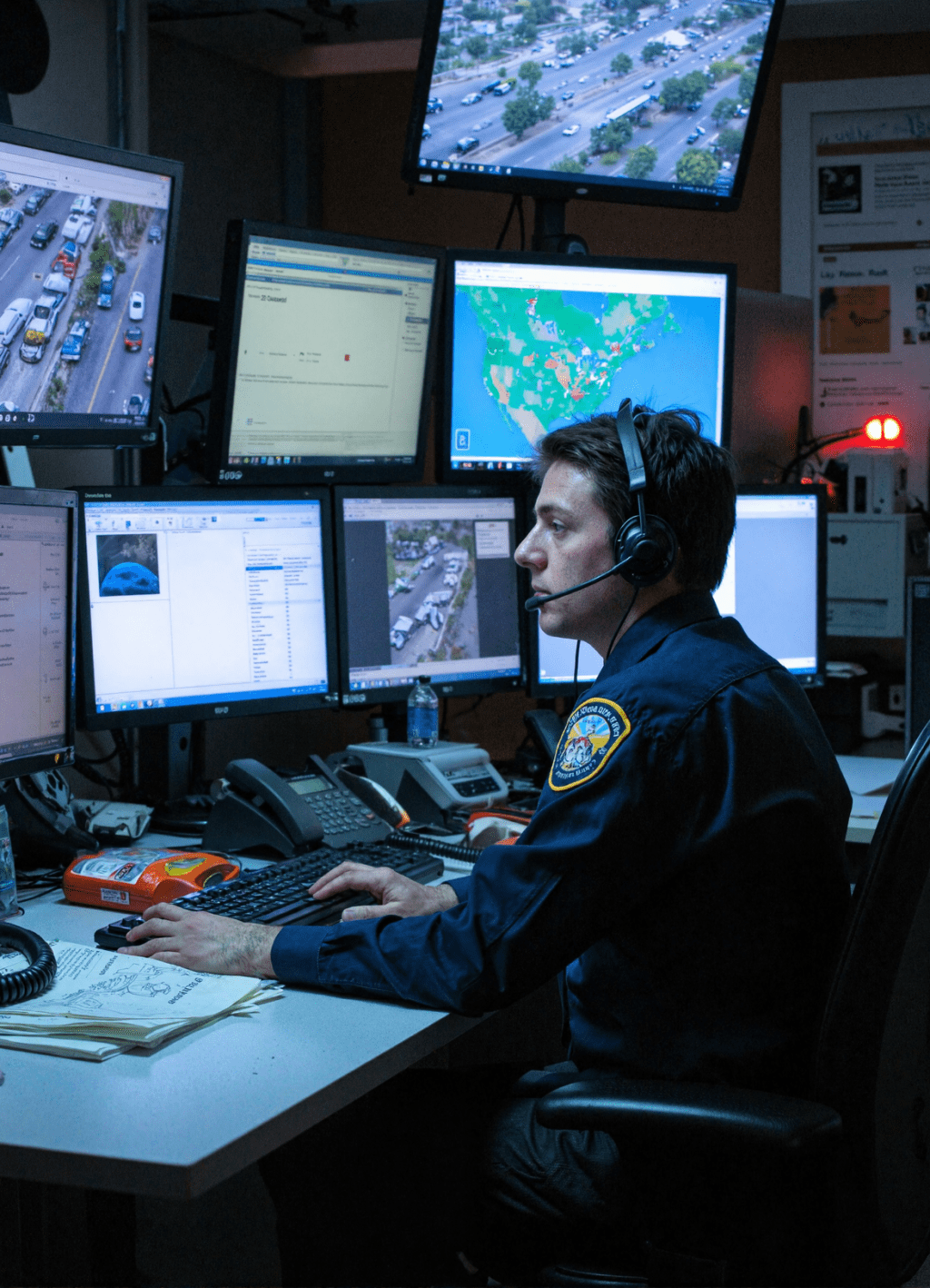
A person calls 911, their voice shaking so badly they can’t even say where they are. Someone else is screaming in the background. A police officer’s voice crackles through the radio, asking for backup. Meanwhile, a dispatcher sits surrounded by glowing screens, each one showing maps, camera feeds, and streams of urgent information.
In the middle of all this chaos sits one calm voice — steady, clear, and focused.
This voice belongs to a public safety dispatcher. You may never see their face or know their name, but they are the heartbeat of every emergency response. They talk people through the scariest moments of their lives, help officers stay safe, and juggle a dozen moving parts on a dozen screens without missing a beat.
I’ve watched dispatchers turn pure panic into life-saving action with nothing but their voice and quick thinking. It’s a job that demands nerves of steel, endless compassion, and lightning-fast decision-making.
But here’s the real question: Could you stay calm enough to guide someone through their worst day — and possibly save a life — all from behind a screen? A job where someone else most often gets the credit for problems you likely solved while simultaneously juggling four of five major events at once? It takes a special person. That’s what this blog is about; those special people who are unseen, unrecognized, and yet, invaluable to the civil society we all enjoy. This is the those radio operators/dispatchers everywhere!
The unseen heroes behind the headset
When most people think of first responders, they picture flashing lights and uniforms on the street. But before those sirens even start, there’s a dispatcher making the first critical move.
Dispatchers are the true first link in the chain of emergency response. They answer the call — sometimes from someone hiding in a closet, whispering to stay alive, or from a driver trapped after a crash, trying to stay conscious until help arrives. Every word matters.
It’s not just phone calls. Dispatchers also guide police officers and firefighters over the radio. They warn them about dangerous suspects, tell them about weapons on scene, or remind them of backup arriving. Officers rely on dispatchers to be their eyes and ears before they even step out of their vehicles.
Behind the scenes, dispatchers are glued to multiple computer screens and video feeds. They track where every officer is, watch for updates from surveillance cameras, read incoming data from alarm systems, and monitor countless moving parts all at once. It’s like conducting an orchestra in the middle of a storm — and missing a single detail can put lives at risk.
“Dispatchers aren’t just answering calls — they’re coordinating chaos and guiding heroes every single day.”
In those tense moments when an officer shouts “Shots fired!” or a parent screams “My baby’s not breathing!” dispatchers can’t panic. Their calm voice becomes a lifeline, giving step-by-step instructions, sending help, and keeping control even when it feels like the whole world is falling apart.
The emotional toll no one sees
Imagine hearing people’s worst moments every single day. One minute, a mother is begging for help for her child. The next, an officer is calling for immediate backup. Then, another caller might be threatening to end their life.
Dispatchers have to carry all of these stories — and they don’t get to close their eyes or turn down the volume. They listen to people at their most desperate, trying to hold them together until help arrives.
They can’t show fear or frustration. Even when their heart is racing, they have to sound steady and confident. After the call ends, they don’t always learn how it turned out. Did the baby start breathing again? Did the officer make it home safe? That uncertainty can weigh heavily.
Some days, dispatchers finish a shift feeling drained, replaying calls in their heads on the drive home. Over time, all those voices and stories can leave scars. Many dispatchers experience stress, anxiety, and even symptoms of PTSD. Yet, they keep coming back, shift after shift, because they know someone out there will need them.
That level of emotional strength isn’t something you can teach in a classroom. It’s a special kind of resilience — the kind that makes a dispatcher not just a worker behind a desk, but a true lifesaver.
The ultimate multitaskers
Think you’re good at multitasking? Dispatchers take it to a whole new level.
In front of them are multiple computer screens showing maps, units in the field, and real-time updates. One screen might display incoming 911 calls, another might show camera feeds from across the city, while another tracks every officer’s location. On top of that, they have radio channels buzzing in one ear and phone calls in the other.
While juggling all this, dispatchers are also typing fast, entering critical information, updating officers, and making quick decisions that can mean the difference between life and death.
It isn’t just about handling chaos — it’s about organizing it. Every second counts, and every detail matters. A wrong address, a missed clue in someone’s voice, or a delayed instruction can put lives in danger.
Beyond the tech, dispatchers need sharp intuition and a steady mind. They have to sense when a caller is hiding something, when an officer sounds tense, or when a situation is about to escalate. They turn fragments of information into clear action plans in seconds.
“They don’t wear a uniform, but dispatchers hold the entire emergency response system together, one call at a time.”
Keeping everyone safe — one call at a time
Dispatchers aren’t just helping the person on the phone. They’re also protecting every officer and firefighter responding to the scene.
Before an officer even steps out of their car, a dispatcher has already gathered vital information: Who is involved? Is there a weapon? Are there children nearby? Dispatchers paint the picture so responders know what they’re walking into.
When things get chaotic on scene, dispatchers keep track of every unit, watching for signs of trouble. If an officer suddenly stops responding, dispatchers immediately take action to check on them or send backup. In tense moments, an officer might yell, “I need help now!” The dispatcher is already moving resources before the words are fully out.
This responsibility is heavy. Officers trust dispatchers with their lives, knowing someone is always listening and ready to help. That bond runs deep, even if they never meet face to face.
For the public, dispatchers provide clear instructions that can save lives: how to control bleeding, how to perform CPR, or how to stay safe while waiting for help. In many cases, it’s the dispatcher’s calm coaching that keeps a person alive until responders arrive.
Behind every safe rescue, every officer who makes it home, and every life saved before help arrives, there’s a dispatcher quietly guiding it all.
Why choose such a tough job?
After hearing about all the stress and emotional weight, you might wonder: Why would anyone want to become a dispatcher?
For many, it’s about making a real difference. Every call is a chance to save someone’s life, protect an officer, or comfort someone in their darkest moment. Few jobs offer that kind of impact.
There’s also a strong sense of teamwork and purpose. Dispatchers are part of a tight-knit group that supports each other like family. They know their work matters, even if most people never see it.
Some dispatchers say they love the constant challenge — no two days are the same. Each shift brings new situations, new puzzles to solve, and new opportunities to help.
And while the job is tough, it’s also deeply rewarding. There’s nothing quite like hearing that an officer made it home safe because of your quick thinking, or that a baby took its first breath again because you gave CPR instructions over the phone.
Choosing to become a dispatcher isn’t about wanting praise. It’s about wanting to be the steady hand that guides others through chaos, even if no one knows your name.
What makes a great dispatcher?
Not everyone is built for this work. The best dispatchers share a few special qualities that help them thrive under pressure.
First, they have unshakable calmness. Even when someone is screaming on the line or an officer is shouting for backup, a great dispatcher keeps their voice steady and clear. That calm presence can mean everything to someone in crisis.
Second, they’re master multitaskers. They can listen, type, watch screens, and think ahead — all at the same time. It’s like playing chess while juggling flaming torches, and never missing a beat.
Third, they’re deeply compassionate. Dispatchers talk to people on their worst days — scared parents, injured drivers, victims of violence. A good dispatcher offers comfort and empathy, even when they’re moving fast to coordinate help.
Finally, they have sharp intuition. They can pick up tiny details in a caller’s voice or spot clues that something isn’t quite right. That gut feeling can be the difference between a routine call and a life-threatening emergency.
If you have these qualities, you might be the kind of person who can thrive as a dispatcher — the hidden hero behind every siren.
Conclusion
Dispatchers are more than just voices on the other end of a line. They are the calm in the storm, the silent protectors, and the first to act when seconds count. They work in the shadows, juggling screens, radios, and panicked voices, all while holding the lives of strangers — and their fellow first responders — in their hands.
They don’t do it for applause or headlines. They do it because they have the rare mix of courage, compassion, and razor-sharp focus that it takes to guide people through their worst moments.
Could you be the calm voice in someone’s worst moment?
If you can imagine yourself staying steady when someone else is falling apart, thinking clearly when others freeze, and caring deeply even when no one sees your face — then maybe, just maybe, you could be the voice that saves a life one day.
Dispatchers may not wear badges or run into burning buildings, but they are heroes all the same. And if you feel that pull — that desire to help in a way most people never will — maybe it’s time to consider stepping behind the headset and becoming the voice that guides your community through its hardest days.
 Thin Blue Faith
Leave a comment