Mike Crispen – September 23, 2025
This year, Rosh Hashanah begins at sundown on September 22, 2025, and ends at nightfall on September 24, 2025. While many people think of a “new year” as fireworks, countdowns, and resolutions, the Jewish New Year is far different. Scripture calls it Yom Teruah (Leviticus 23:24; Numbers 29:1), the Day of the Shofar Blast. Later tradition named it Yom HaDin (Day of Judgment) and Yom HaZikaron (Day of Remembrance). On this day, the sages say, all humanity passes before God as sheep before a shepherd. It begins the Ten Days of Awe, a sacred season that culminates in Yom Kippur, the Day of Atonement, when judgment is sealed. These days are devoted to teshuvah (repentance), tefillah (prayer), and tzedakah (acts of justice and charity), the three pathways to forgiveness and renewal.
Though the Gospels do not name the holiday outright, Jesus’ (Yeshua) teachings, His use of shofar imagery, His insistence on forgiveness, and His participation in the fall feasts show that His ministry was deeply aligned with the meaning of this sacred season. When He spoke of the “great trumpet” that would sound at the end of the age (Matthew 24:31), or when He taught that forgiveness of others is a condition for receiving forgiveness from God (Matthew 6:14–15), He was speaking within the same spiritual framework that Rosh Hashanah proclaims each year. His parables of judgment, too, reflect the holiday’s themes of accountability tempered by mercy. In this way, Yeshua was not departing from Israel’s traditions but fulfilling and deepening them. The message of Rosh Hashanah through Yom Kippur—echoed and deepened by Yeshua—is one of hope, correction, forgiveness, and renewal.
What makes Rosh Hashanah so compelling is its insistence that no past failure is final. Every year it declares that a person is not bound forever to mistakes, anger, or regret. With repentance, prayer, and justice, life can begin again. The shofar’s cry awakens the conscience like an alarm, urging the heart to confront what is broken and to seek repair. Maimonides explained that its call is God’s voice saying, “Awake, sleepers, from your slumber! Examine your deeds, return in repentance, and remember your Creator.” Renewal is not an idea but a summons to action.
This summons has profound meaning for the profession of policing. Law enforcement, like life itself, is marked by human imperfection. An officer may act in haste or judgment that later proves flawed. Relations between police and community may grow strained after difficult events. Even entire systems sometimes need reform. Yet the message of Rosh Hashanah is that accountability and renewal are not opposites but partners. What is broken can be rebuilt, and trust, once damaged, can be restored through honest acknowledgment and restorative justice.
For officers, this means understanding the badge as more than authority. The badge represents both justice and mercy. To enforce the law without compassion risks becoming cold and mechanical, while to show compassion without accountability risks undermining integrity. The balance is not easy, but it is precisely the balance that God Himself embodies as Judge and King—holding humanity accountable while opening the door to forgiveness.
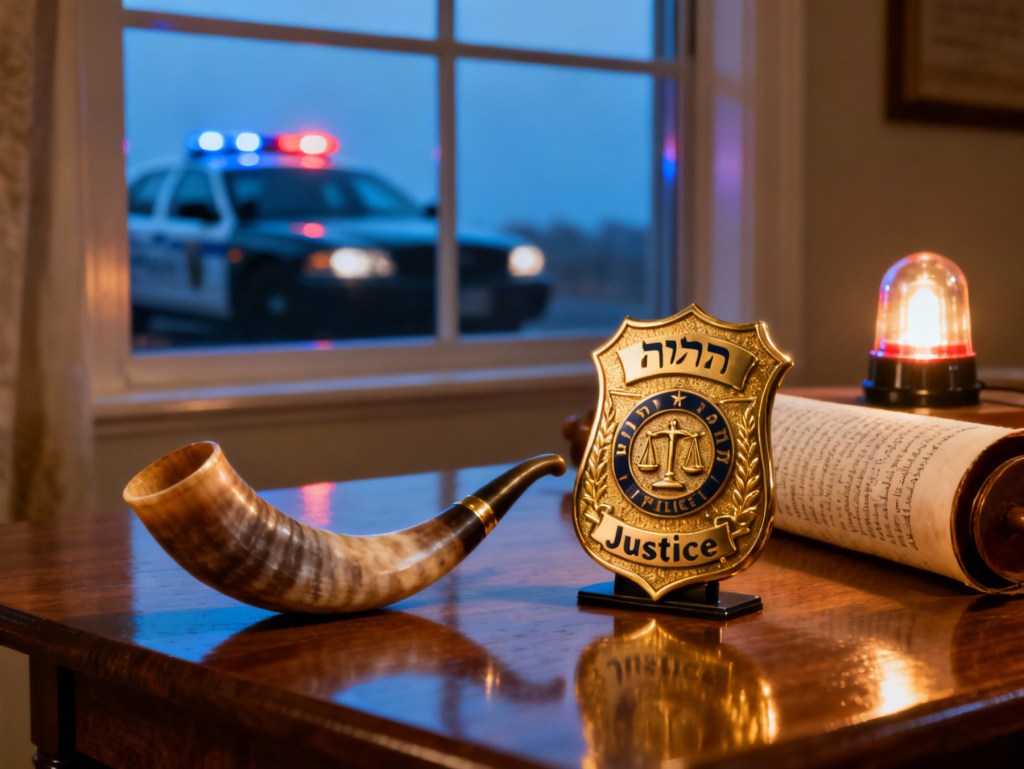
Even the symbols of Rosh Hashanah mirror the world of policing. The shofar and the siren both interrupt daily life with urgent sound. Each is a public declaration that demands attention: the shofar calls the soul to repentance, while the siren calls the community to awareness of law and safety. Both are reminders that the ordinary can be interrupted when justice or renewal demands response.
For the community, this sacred season teaches that the people behind the badge are human beings who also walk the path of accountability and renewal. Just as God calls each person to repent and begin again, so too officers can learn from their errors, seek forgiveness, and strive for greater integrity. In turn, communities are called to extend grace when sincere efforts at reconciliation are made. Trust, like repentance, is not passive; it is an act of covenant between neighbors and guardians, renewed by honest steps in the right direction.
For the officer, Rosh Hashanah’s call is a “new year” opportunity to protect with fairness, serve with compassion, and lead with integrity. Rosh Hashanah’s call reaches into the core of duty. Just as the nation of Israel uses this sacred season to reconcile itself with God, as we all should, so too can a profession devoted to justice use this time to reflect, correct, and renew its covenant with the community it serves. On the individual level, an officer’s daily work is not about a single moment of renewal but about the steady discipline of living by the commandments of justice—walking in gevurah (strength and restraint) and chesed (kindness and mercy). In this way, the badge becomes more than authority; it becomes a daily witness that law and compassion must dwell together. The shofar’s blast is a reminder that renewal is not once a year but a continual practice of waking up to responsibility.
And so the Torah of this season speaks clearly. Repentance calls us to acknowledge our wrongs and seek repair with those we have harmed. Prayer calls us to align our hearts with God’s will and to keep our motives pure. Acts of justice and mercy call us to rebuild what is broken in our communities through action, not words alone. These three together form the pattern of life that Rosh Hashanah proclaims, and they remain as relevant for policing as for the soul of every human being.
May the siren and the shofar both remind us that we live under the watchful eye of a just and merciful God. May this new year be a time of reflection, renewal, and peace—for officers, for communities, and for all who long to see justice and mercy dwell together in the land.
 Thin Blue Faith
Leave a comment